|



 |


Do you feel like practising your English during the summer?
Then, read on...
|
 |
DICTIONARIES | VIDEO | LISTENINGS
| TEXTS | GAMES | EXERCISES
|
|
Summer Tips
|
Do you remember Mr Duncan's advice
to make learning English easier? The
most important thing is... lots of practice!
The best thing for practising is to do something that is interesting for you personally.
Different people find different things interesting.
For example, you can try these
33
ideas to improve your speaking skills and pronunciation, and see which are interesting for
you.
Here is an easy way to learn about English: a Romanian girl who had to learn English as a second language
and can give you lots of tips and tricks to learn basic things:
espeakenglish.org.
Her pronunciation course is the best part of it:
Clase de pronunciación 1
Clase de pronunciación 2
Clase de pronunciación 3
Clase de pronunciación 4
Try to practise every day. It is better to work a little every day than a lot occasionally.
Change activities before you get bored.
Remember: if you are bored, you cannot pay attention, and you will not learn much.
You can keep a learner's log (a learning diary) where you write down what you do and when,
what things are most interesting for you, what score you get when you do exercises,...
This diary can help you decide what you need to revise and what activities are better for you,
so that you can learn more effectively.
DICTIONARIES | VIDEO | LISTENINGS
| TEXTS | GAMES | EXERCISES
Here are a few dictionaries which you can use to help you. First, some conventional
dictionaries:
- Wiktionary. It is organised like wikipedia;
you can find definitions in English, and you can listen to the pronunciation of English
words. It includes some examples. It has no publicity.
- Dictionary.com. Here you can find
definitions, examples and the pronunciation (in IPA and recorded).
- Collins dictionary. Here you can
translate words from English to Spanish, and viceversa. It includes lots of examples,
but fewer meanings. Be careful, they will try to install their software in your computer.
It does not include the pronunciation.
And now, some unconventional ones:
- Wordreference. It is a specialised site
for professional translators. You will find here technical terms that are difficult
to find in other dictionaries, and there is a forum for tricky phrases and technical terms.
The information is also very clearly organised, with examples in two languages, and you
can also listen to the pronunciation.
- Linguee. It is
another specialised site for translators. It shows you a list of fragments from texts
freely translated by professional translators, so that you can see how a word or phrase
is used in context and many different ways it can be translated. Use this site when
everything else has not worked.
- sentence - your dictionary is
another site where you will find lots of example sentences in which the context
will help you decide if the word means what you think it means. If you have trouble
remembering the meaning of a new word, this is the place which will help you learn
it forever.
- niftyword is a collocations dictionary
which will help you find the word that you need to go with another one.
- Do you know which is more frequent — "should" or "ought to"? Find out in
Google's Ngram Viewer! You can compare pairs of words to see how frequent they are,
or how one replaces another over time, like the past and past participle ("spilt") of
a traditionally irregular verb, "spill", which are being replaced by the regular form
("spilled"), especially in American English.
- Finally, here is a videoclip from Cambridge English Language Assessment, which
explains how you can make a vocabulary book to remember new words:
DICTIONARIES | VIDEO | LISTENINGS
| TEXTS | GAMES | EXERCISES
-
 Para estudiantes avanzados que quieran aprender a pronunciar perfectamente:
en su canal de
YouTube, Adrian Underhill nos explica cómo enseña a pronunciar
correctamente a sus alumnos de nivel más avanzado.
Para estudiantes avanzados que quieran aprender a pronunciar perfectamente:
en su canal de
YouTube, Adrian Underhill nos explica cómo enseña a pronunciar
correctamente a sus alumnos de nivel más avanzado.
-
Tim's pronunciation workshop
 is a series of videoclips by the BBC which will help you to learn about both basic and
advanced pronunciation tips. The series started in 2014 and by now (June 2017) it covers
not only all English phonemes, one by one, but many other interesting aspects of English
sounds.
is a series of videoclips by the BBC which will help you to learn about both basic and
advanced pronunciation tips. The series started in 2014 and by now (June 2017) it covers
not only all English phonemes, one by one, but many other interesting aspects of English
sounds.
- The BBC (the British Broadcasting Corporation, which broadcasts the British public
radio stations and television channels) has lots of other materials for learning English:
-
 The Flatmates:
a cartoon soap opera which you can watch with written speech bubbles (like a comic) in the
BBC channel of youtube. You can learn a lot of everyday vocabulary, colloquial expressions,
and common English phrases and idioms, and have fun at the same time!
The Flatmates:
a cartoon soap opera which you can watch with written speech bubbles (like a comic) in the
BBC channel of youtube. You can learn a lot of everyday vocabulary, colloquial expressions,
and common English phrases and idioms, and have fun at the same time!
-
 6-minute English: short pieces of news. You can download the .mp3 recordings
and the written transcripts in .pdf format.
6-minute English: short pieces of news. You can download the .mp3 recordings
and the written transcripts in .pdf format.
-
 Explore The BBC website
and see what else you can find!
Explore The BBC website
and see what else you can find!
-
 Learn about modern slavery.
This isn't really a fun site to visit; however, at the same time as you learn English
by watching videoclips and answering questions, you will learn about one of the most
important global issues that we all should be aware of: many of our decisions when we buy
a product help some people, private companies or even governments to continue exploiting
human beings as slaves.
Learn about modern slavery.
This isn't really a fun site to visit; however, at the same time as you learn English
by watching videoclips and answering questions, you will learn about one of the most
important global issues that we all should be aware of: many of our decisions when we buy
a product help some people, private companies or even governments to continue exploiting
human beings as slaves.
-
 The British Council
website has lots of interesting things to learn English. Here are some funny short stories
(2 - 3 minutes) that you can watch with English subtitles.
The British Council
website has lots of interesting things to learn English. Here are some funny short stories
(2 - 3 minutes) that you can watch with English subtitles.
-
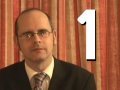 Revise Mr Duncan's videos.
These are the videos that Mr Duncan prepares to help you learn basic English,
with a lot of vocabulary. Tip: stop the videoclip to read and understand the subtitles,
then watch it again covering the subtitles with a slip of paper, or moving the window
below the screen to hide the subtitles.
Revise Mr Duncan's videos.
These are the videos that Mr Duncan prepares to help you learn basic English,
with a lot of vocabulary. Tip: stop the videoclip to read and understand the subtitles,
then watch it again covering the subtitles with a slip of paper, or moving the window
below the screen to hide the subtitles.
-
 Did you know you can listen to some radio stations in English? Try the
BBC London!
Don't try to understand everything — it is impossible! But you can play a game:
find out in less than 30 seconds what they are talking about!
Did you know you can listen to some radio stations in English? Try the
BBC London!
Don't try to understand everything — it is impossible! But you can play a game:
find out in less than 30 seconds what they are talking about!
-
 You can also watch TV through the Internet! Not all stations are easy to watch,
as they are broadcast in many different formats; some are easier than others.
The BBC World News
TV station is really accessible.
You can also watch TV through the Internet! Not all stations are easy to watch,
as they are broadcast in many different formats; some are easier than others.
The BBC World News
TV station is really accessible.
-
 Watch subtitled videoclips to get the best of both worlds: you can read first, then listen and read, then listen only
to make sure you understand most of it. Try listening without reading first, and see if you can catch some things, but don't try
to understand everything!
Watch subtitled videoclips to get the best of both worlds: you can read first, then listen and read, then listen only
to make sure you understand most of it. Try listening without reading first, and see if you can catch some things, but don't try
to understand everything!
-
 A massive open online course (mooc) is a course that you can do online for free.
Here is a videoclip with subtitles that explains about a mooc aimed at B1-level students
who want to improve their skills (reading, writing, listening and speaking) to prepare
for the official Cambridge Language Assessment IELTS exams. You can join it, too!
A massive open online course (mooc) is a course that you can do online for free.
Here is a videoclip with subtitles that explains about a mooc aimed at B1-level students
who want to improve their skills (reading, writing, listening and speaking) to prepare
for the official Cambridge Language Assessment IELTS exams. You can join it, too!
- Youtube is an inexhaustible source of videoclips about all sorts of things
— good and bad, so if you are young or impressionable, be careful when
following links, because it is easy to stumble onto something that you really
do not want to watch. Here is a harmless example: in this videoclip called
English quick fix
you will get some easy-to-understand help with common mistakes.
- If your listening skills are already very good, you might want
to listen to this other videoclip with "video lectures designed for students
studying World History at the high school level although [they] may be appropriate
for middle schoolers, life long learners, lost college students and the cray cray
on the internets", by an American who talks very clearly, but really fast about
great historical events, from the Neolithic to Apartheid, in a channel called
World History
Review (by the way, "cray cray" means "really crazy").
DICTIONARIES | VIDEO | LISTENINGS
| TEXTS | GAMES | EXERCISES
-
 Listening is very important.
Some people, like the teacher in this videoclip, say it is the most important thing! You can watch the video (it is not difficult to
understand the main ideas) or visit his website (but he will try to sell you an English course!) for a lot of good ideas on how to learn
English more efficiently. With a little time, you can find his videos on YouTube, too.
Listening is very important.
Some people, like the teacher in this videoclip, say it is the most important thing! You can watch the video (it is not difficult to
understand the main ideas) or visit his website (but he will try to sell you an English course!) for a lot of good ideas on how to learn
English more efficiently. With a little time, you can find his videos on YouTube, too.
Here are a few
tips
about how to use the transcripts in some of these pages:
- You can copy the script to a text file, then listen and try to
understand as much as you can, checking the script when you don't
understand something.
- If you find it too difficult, read the script at the same time as
you listen, stopping to check the meaning of new words.
Then watch the video again, without reading the script.
- After you have viewed the whole videoclip (or just a part of it,
if you find it too long or you don't have a lot of time),
you can use a part of it as a dictation. Remember to check
the grammar as you write, it will help you understand it better.
 The British Council has a series of recordings with self-correcting exercises
which you can use to
practise your listening skills.
The British Council has a series of recordings with self-correcting exercises
which you can use to
practise your listening skills.
 The British Council also has a series of episodes called
"Big City, Small World"
of A2/B1 level which you can listen to and, if necessary, read at the same time (or better
still, before you listen). You can also use them as listening practice (first you listen
and take notes, then you read the transcript and check for any mistakes).
They include some previous vocabulary practice, and a comprehension exercise and more
vocabulary exercises for later. You can download the script, the exercises, the answers...
even the recording!
The British Council also has a series of episodes called
"Big City, Small World"
of A2/B1 level which you can listen to and, if necessary, read at the same time (or better
still, before you listen). You can also use them as listening practice (first you listen
and take notes, then you read the transcript and check for any mistakes).
They include some previous vocabulary practice, and a comprehension exercise and more
vocabulary exercises for later. You can download the script, the exercises, the answers...
even the recording!
-
 Another page with teachers' videoclips that includes the scripts.
Read the tips above for ideas about how to use recordings with transcripts.
Another page with teachers' videoclips that includes the scripts.
Read the tips above for ideas about how to use recordings with transcripts.
One piece of warning: some of these are not native English speakers,
so the grammar they use is a bit funny sometimes.
-
 Listenings.
If you really want to practise listening,
here is a list of recordings with questions, answers and even the tapescripts,
so you can check the words you don't understand. You can also use them as dictations,
it will be difficult, but you will learn a lot!
Listenings.
If you really want to practise listening,
here is a list of recordings with questions, answers and even the tapescripts,
so you can check the words you don't understand. You can also use them as dictations,
it will be difficult, but you will learn a lot!
-
 More listenings!
These are real English people speaking, not actors.
Don't try to understand everything they say! One good thing: you can download the .mp3 recordings easily.
The site includes some questions about the recordings, and the full transcript in case you don't understand something.
Read the tips above for ideas about how to use recordings with transcripts.
More listenings!
These are real English people speaking, not actors.
Don't try to understand everything they say! One good thing: you can download the .mp3 recordings easily.
The site includes some questions about the recordings, and the full transcript in case you don't understand something.
Read the tips above for ideas about how to use recordings with transcripts.
-
 Kilkelly
is a traditional Irish song. Watching video songs
with subtitles is a good way to practise listening and learn vocabulary.
Kilkelly
is a traditional Irish song. Watching video songs
with subtitles is a good way to practise listening and learn vocabulary.
 In Randall's ESL lab you can do listening activities
in three different levels of difficulty. You can listen to the recording, do the exercise and
get the results! One piece of advice: read first the questions, then you will be able to understand
the recording better.
In Randall's ESL lab you can do listening activities
in three different levels of difficulty. You can listen to the recording, do the exercise and
get the results! One piece of advice: read first the questions, then you will be able to understand
the recording better.
 Here is another tip to practise pronunciation with the help of an American computer.
It is a website which publishes short articles on very varied topics. But the interesting part of it is that
you can click on a PLAY button and listen to the whole text, which is highlighted as it is read
— by a computer-generated voice, unfortunately, so the intonation is a bit robot-like, but the pronunciation is OK.
For those of you who need to improve their pronunciation, this could be an effective, fun way!
You can see an alphabetical list of topics, too, in case you are interested in something specific:
http://www.buzzle.com/topics/o.html
Here is another tip to practise pronunciation with the help of an American computer.
It is a website which publishes short articles on very varied topics. But the interesting part of it is that
you can click on a PLAY button and listen to the whole text, which is highlighted as it is read
— by a computer-generated voice, unfortunately, so the intonation is a bit robot-like, but the pronunciation is OK.
For those of you who need to improve their pronunciation, this could be an effective, fun way!
You can see an alphabetical list of topics, too, in case you are interested in something specific:
http://www.buzzle.com/topics/o.html
DICTIONARIES | VIDEO | LISTENINGS
| TEXTS | GAMES | EXERCISES
Finding interesting texts on the Internet is really easy. Tell us if you found some
really good ones!
- If you don't know where to start, try the Wikipedia in
simple English!
This is the list of words
that you need to know if you want to read in
basic English.
-
 Magazines in English
are easy to find on the Internet. This is the article which we read in class about
how the Maldives will be affected by the rise in the sea level caused by global warming.
Magazines in English
are easy to find on the Internet. This is the article which we read in class about
how the Maldives will be affected by the rise in the sea level caused by global warming.
- The BBC has hundreds of really interesting articles about anything you can imagine. Give it a try!
-
If you want to do reading practice, the British Council has a series of self-correcting text-based exercises.
which you can use to
practise your reading skills.
DICTIONARIES | VIDEO | LISTENINGS
| TEXTS | GAMES | EXERCISES
- www.englishexercises.org — Games and exercises.
 Here you will find hundreds of exercises to learn English online: vocabulary, grammar, listening, songs, etc.
Here are some examples:
hangman game: daily routines,
song: Lemon Tree,
video listening: Twilight,
space game: irregular verbs
-
Play games to revise basic words and basic grammar.
In this huge website you will find lots of interesting, fun games
to revise spelling, pronunciation, and many more things. Don't miss it!
-
 More games from Aurora's website. Flash games to learn about
grammar, vocabulary and important issues, classified by levels.
More games from Aurora's website. Flash games to learn about
grammar, vocabulary and important issues, classified by levels.
-
 Visit the
Duolingo site to learn English vocabulary and a little grammar in a fun way.
It is not exactly a game, but it feels like one! Visit the
Duolingo site to learn English vocabulary and a little grammar in a fun way.
It is not exactly a game, but it feels like one!

DICTIONARIES | VIDEO | LISTENINGS
| TEXTS | GAMES | EXERCISES
-
 Cambridge English has activities and exercises
that you can do not only on a computer, but also on your mobile phone. In the following link you can
select an activity
depending on what you want to study or the time you have (more or less than 5-10 minutes). Cambridge English has activities and exercises
that you can do not only on a computer, but also on your mobile phone. In the following link you can
select an activity
depending on what you want to study or the time you have (more or less than 5-10 minutes).
 If you want to practise specific grammar or vocabulary, here it is easy to find all sorts of exercises.
For example, have a look at what you can find when you look up
"weather".
If you want to practise specific grammar or vocabulary, here it is easy to find all sorts of exercises.
For example, have a look at what you can find when you look up
"weather".
-
 This is one of our best discoveries:
live worksheets.
Here you will find exercises that you can do to practise your
English. When you finish, select "check my answers" to see where
you made a mistake (hovering the mouse over the wrong answers
will show you the correct ones).
This is one of our best discoveries:
live worksheets.
Here you will find exercises that you can do to practise your
English. When you finish, select "check my answers" to see where
you made a mistake (hovering the mouse over the wrong answers
will show you the correct ones).
To find exercises, select the tab "Interactive Worksheets",
choose English or Spanish to select the language of the instructions
in the worksheets, then select English or ESL (English as a second language)
in the list of subjects to find what you want to practise. You can also
use the "Advanced search" button at the top (it will show you the
right exercises for you faster).
-
 Revise the exercises in our website.
That way you will not forget all the vocabulary that you have learnt this year.
You can also revise vocabulary from previous years, especially from the 1st year
if you did not study in the European Section that year.
Revise the exercises in our website.
That way you will not forget all the vocabulary that you have learnt this year.
You can also revise vocabulary from previous years, especially from the 1st year
if you did not study in the European Section that year.
-
 Use drills to practise basic grammar and vocabulary if you have problems
with basic English. You can do them orally to practise pronunciation, too.
Use drills to practise basic grammar and vocabulary if you have problems
with basic English. You can do them orally to practise pronunciation, too.
-
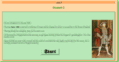 Reading action mazes can be a lot of fun. Do you remember
Elizabeth's action maze?
You can turn it into a game with your friends by betting on each option before checking which
is the historical truth (rules: minimum bet = 1 gold coin; maximum: half your purse; everyone
starts with 100 gold coins in their purse). Here are some more
action mazes from the Internet
which you can play with in the same way with your friends.
Reading action mazes can be a lot of fun. Do you remember
Elizabeth's action maze?
You can turn it into a game with your friends by betting on each option before checking which
is the historical truth (rules: minimum bet = 1 gold coin; maximum: half your purse; everyone
starts with 100 gold coins in their purse). Here are some more
action mazes from the Internet
which you can play with in the same way with your friends.
-
 Do you like interactive computer exercises?
Here is a list of exercises from your teachers and from other colleagues who have websites to practise English:
Do you like interactive computer exercises?
Here is a list of exercises from your teachers and from other colleagues who have websites to practise English:
- Workbook:
basic techniques for self-study. Try them, if you find them useful, ask your teacher to prepare more materials for you!
- More drills!
This is also under construction, so if you like it, ask your teacher to write more.
- Hot Potatoes exercises.
These are very varied in type, topic and level. Try them; if you like them, there are a lot of
similar pages
on the Internet.
- Aurora Gil's Interactive English.
These are fantastic exercises, activities and games designed with Flash. Very varied, classified by levels, there is something
interesting for everyone!
-
 If you need help with more advanced grammar, you will find a long list of grammar and vocabulary exercises at
ELT Base.
If you need help with more advanced grammar, you will find a long list of grammar and vocabulary exercises at
ELT Base.
 Here is another page with exercises: Bon's tips.
It has a huge collection of links to specific exercises in different websites;
they include grammar, vocabulary and listening exercises, in many different levels.
Here is another page with exercises: Bon's tips.
It has a huge collection of links to specific exercises in different websites;
they include grammar, vocabulary and listening exercises, in many different levels.
-
 There are literally millions of web pages which offer English lessons for free.
El blog para aprender inglés
is a blog where an American teacher offers lessons in English, with links to
many other websites with exercises, recordings, videoclips, etc.
You can also post your questions, and she promises to answer!
There are literally millions of web pages which offer English lessons for free.
El blog para aprender inglés
is a blog where an American teacher offers lessons in English, with links to
many other websites with exercises, recordings, videoclips, etc.
You can also post your questions, and she promises to answer!
- Finally, if you are not afraid to experiment, visit our freeware section and download
a beta version of our own CALL (computer-aided language learning) software, the MOUSE program.
If you need exercises which are exactly adapted to what you want to practise,
ask your teacher for help. Here is an example:
- Work in groups, make your own exercises and share them.
You can organise a work group with your friends to practise English during the summer.
If there are ten of you, you will have to prepare only one exercise, and you will be able
to do nine more! Here is an example to practise prepositions:
- Find an interesting text (you can find many in the wikipedia,
selecting the
simple English language). Remember that exercises will be more enjoyable if the texts
that you use are easy to read (so that we can understand most of the information) and if
that information is interesting in itself for you. Choose topics that you would read if
you found them in a magazine in Spanish, and do not make your exercises too long
(200 - 300 words is probably long enough).
- Copy and paste the text onto a word processor (you can use Wordpad or even Notepad
if you want to work faster).
- Save a copy on your hard disk drive. Call it "source_1.txt" (you can use numbers,
or a more descriptive name, like "source_pandas.txt" for a text about panda bears).
- Use the "find and change" menu option to replace "in" with "____". Do the same
for "on", "at", "from", "for", "to", or any other prepositions you want to practise.
The more prepositions you replace, the more difficult the exercise will be.
Don't forget to include a list of the prepositions that you deleted in your exercise.
- Save your file as "exercise_1.txt".
- Exchange your files with the other members of your group via e-mail.
- If you find it interesting, ask your teacher to help you share your work
with the rest of the class through our webpage.
Other things you can practise this way:
- a/some/any/the/zero article
- pronouns and possessives
- links
- adjectives
- general vocabulary
- word order (with combinations of adjectives and nouns)
Each of these types of exercise will need a slightly different approach; for example,
if you want to practise verb tenses you can replace each verb with its infinitive.
If your friends find your exercise too difficult, you can give some options to choose from.
If you prefer to work with vocabulary, show a list of all the words you deleted from your text,
and select words that have something in common: adjectives, nouns related to the topic of the
text, irregular verbs,...
|
|
|
JJCC
|
|